
Bookkeeping – Definition, Importance, Types & Methods
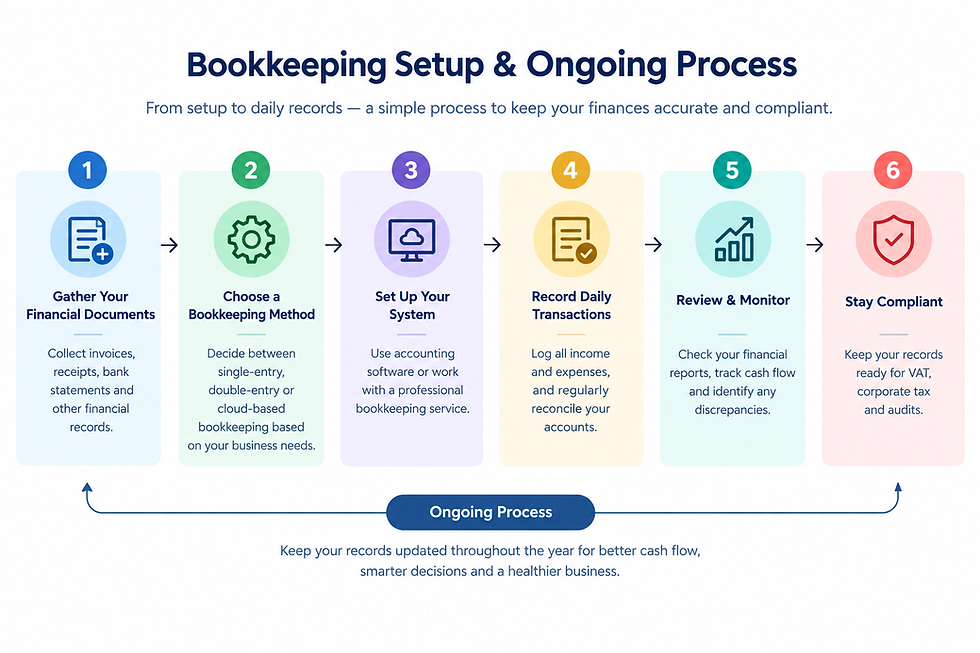
Business accounting in the UAE requires managing numerous things like invoices, VAT, payroll, and a range of other financial operations simultaneously. Correct accounting from the very beginning is not an option, but a key that will allow you to proceed further. In our experience at Pearl Accounting & Financial Services LLC, Bookkeeping in UAE companies often becomes something optional. In reality, maintaining accurate records throughout the year is one of the foundations of a compliant, fundable, and financially healthy business. To put it simply, bookkeeping can be described as recording all the financial transactions made by a business systematically.
This blog post describes the meaning, importance, different types, and methods of bookkeeping, along with steps on how to begin. At Pearl Accounting & Financial Services LLC, we have 15 years of experience in establishing proper financial records for entrepreneurs and small and medium-sized enterprises in the UAE.
What Is Bookkeeping?
Essentially, it is the systematic recording on a daily basis of all the business’s income and expenditure transactions. All dirhams that flow into and out of the business must be accounted for so as to provide the owners with a chronological view of the business’s financial situation.
From experience, we know that most new business owners regard bookkeeping as a once-a-year exercise undertaken prior to the tax season. However, after working with UAE businesses for 15 years, we have seen that consistent bookkeeping gives owners much better visibility over cash flow, expenses, profitability, and upcoming financial obligations.
Why Is Bookkeeping Necessary for UAE Business?
Organised accounting does not only mean organising things; it directly impacts a business's capacity to raise capital, successfully undergo audits, and comply with the VAT and corporate tax rules imposed by the Federal Tax Authority.
One of the most common issues we see is businesses trying to recreate several months of financial records shortly before a VAT return, tax filing, or audit. It causes mistakes, missed credits, and stress, but regular bookkeeping helps avoid these problems. During our accounting and compliance work, we find that businesses with up-to-date records are in a much stronger position when making decisions about hiring, expenditure, financing, or expansion.
For businesses that need broader financial support, our Accounting Services can help maintain accurate financial records and support ongoing reporting and compliance.
What Are the Differences Between Bookkeeping and Accounting?
Bookkeeping vs accounting is one of the most common questions that we get from our customers. Bookkeeping is about recording, and this process is repetitive and transactional. Accounting, however, is about interpreting the data obtained at the recording stage to come up with financial statements and analysis.
In simple terms, a bookkeeper provides the initial raw material, whereas the accountant works on turning it into useful information for a bank manager, investor, or tax collector. In our experience, businesses get the best results when bookkeeping and accounting work together: accurate transaction records provide the foundation for meaningful financial analysis and reporting.
Bookkeeping vs Accounting
Area | Bookkeeping | Accounting |
Main focus | Recording financial transactions | Analysing and interpreting financial data |
Nature | Repetitive and transactional | Analytical and strategic |
Output | Organised financial records | Financial statements, reports, and insights |
Purpose | Maintaining accurate daily records | Supporting decisions, reporting, and compliance |

What Are the Types of Bookkeeping?
Bookkeeping can be done using different techniques, and it is always important to choose a technique depending on the size and complexity of the company. Based on our experience with UAE entrepreneurs and SMEs, selecting the right bookkeeping approach early can prevent unnecessary changes as transaction volumes increase.
Single-Entry Bookkeeping
It is a basic kind of recording similar to a cash book format and can be used by tiny companies or sole proprietorships with few transactions.
Double-Entry Bookkeeping
In this kind of bookkeeping, every single transaction is recorded in two separate accounts, debit and credit, and is considered to be a more reliable and accurate way of keeping track of the finances. Double-entry bookkeeping is widely used by companies because it provides a more complete view of financial transactions and helps support accurate financial reporting.
Cloud-Based Bookkeeping
The bookkeeping process becomes automated using software like Xero or QuickBooks. Cloud-based systems can make it easier for business owners and accountants to access financial information, reconcile transactions, and maintain records efficiently.
Manual Bookkeeping
Manual bookkeeping involves recording financial information using ledgers, spreadsheets, or other manually maintained records. While this approach may work for businesses with limited transactions, we generally find that growing companies benefit from accounting software that reduces manual data entry and improves record management.
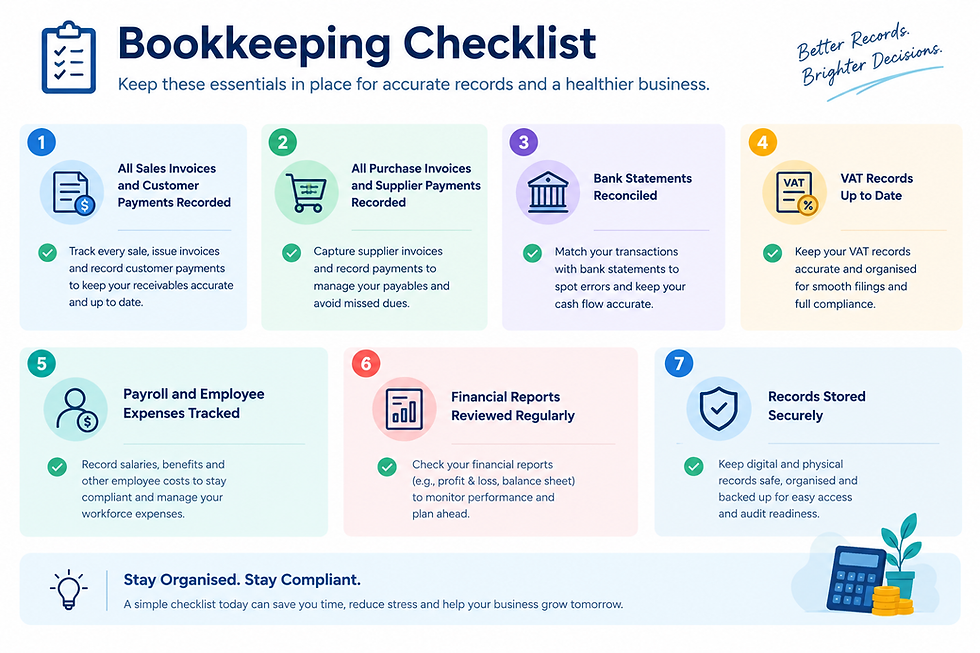
Basic Principles of Bookkeeping: 7-Step Checklist
Over the years, Pearl Accounting & Financial Services LLC has seen that businesses with a simple and consistent bookkeeping routine are better prepared for financial reviews and tax-related requirements. Use this checklist to keep your business records organised throughout the year.
✓ 1. Open a Dedicated Business Bank Account
Keep personal and business finances separate to maintain a clear picture of your actual business profitability.
✓ 2. Choose the Right Bookkeeping System
Select single-entry, double-entry, or cloud-based bookkeeping based on your business size, transaction volume, and requirements.
✓ 3. Record Transactions Promptly
In our experience, recording transactions soon after they occur reduces the risk of missing invoices, receipts, and payment records.
✓ 4. Categorise Business Expenses
Organise costs such as rent, salaries, utilities, supplies, marketing, and other operating expenses.
✓ 5. Reconcile Bank Statements Monthly
Regular reconciliation is one of the simplest ways we identify discrepancies before they become larger accounting problems.
✓ 6. Keep Financial Documents Organised
Maintain invoices, receipts, contracts, bank statements, and other supporting documents in an accessible and secure system.
✓ 7. Review Financial Reports Regularly
Check your profit and loss statement and other financial reports instead of waiting until the end of the financial year.
Pearl Tip: During our bookkeeping and accounting work, we find that businesses that follow these steps consistently have better financial visibility and are better prepared for VAT, corporate tax, audits, and financial decision-making.
For professional assistance with maintaining your records, you can explore our Bookkeeping Services.
How Does a Bookkeeping System Actually Work?
Apart from the choice of the system, it also matters how transactions will be recorded using that system.
The cash basis system of bookkeeping makes entries only if there is an actual exchange of money. It can be suitable for certain small businesses with relatively simple cash flow situations.
The accrual basis system of bookkeeping, on the other hand, records income and expenditure when they are earned or incurred, irrespective of when the related payment is actually received or made. This can provide a more accurate picture of a business's financial position.
For UAE businesses subject to corporate tax, the appropriate accounting basis and record-keeping approach should be assessed according to the applicable UAE tax and accounting requirements. At Pearl Accounting & Financial Services LLC, we review the nature and size of the business before recommending the appropriate bookkeeping and accounting approach.
Businesses preparing for UAE corporate tax can also explore our Corporate Tax Services for professional compliance support.
How Can Bookkeeping Help in Achieving Overall Financial Well-being?
Sound bookkeeping cannot exist in isolation; it plays an integral part in almost every other financial activity of a business. Good bookkeeping makes financial reporting easier, as the quality of financial reports depends heavily on the accuracy of the underlying records.
One of the key benefits we see in practice is that organised bookkeeping makes other financial processes more efficient. Accurate records can simplify account reconciliation, support VAT preparation, and provide accountants with reliable information for financial reporting.
For businesses managing VAT obligations, our VAT Services can provide additional support with VAT-related accounting and compliance requirements.
As businesses transition toward digital invoicing in the UAE, well-organised bookkeeping can also support smoother e-invoicing processes. At Pearl Accounting & Financial Services LLC, we help businesses align their financial records and invoicing processes through our E-Invoicing Services, making it easier to maintain accurate and organised transaction data.
During our readiness assessments, we also find that businesses with structured financial records are better positioned to prepare for tax reviews, audits, financing applications, and other important financial events.
For businesses that are setting up operations in the UAE, proper bookkeeping from the beginning can also complement our UAE Company Setup Services, helping entrepreneurs establish sound financial processes from the early stages.
Common Bookkeeping Mistakes That UAE Companies Should Avoid
Despite best efforts to maintain some semblance of order, there are several common pitfalls that companies frequently run into. Keeping money in a commingled account, entering information only once a month, and not making backups of records are just a few common errors that we see regularly.
One of the most common issues we see is delayed bookkeeping, where transactions are entered only when a VAT return or financial report is due. These gaps can lead to missing documents, inaccurate records, and unnecessary pressure when deadlines approach.
Using a single point of contact for all bookkeeping activities without any review of their work is another common error. In case the employee responsible leaves or gets sick, the company can suddenly lose visibility into its financial affairs.
Based on our experience, a simple monthly review, clear document storage process, and secure electronic backup can significantly reduce this risk. We also recommend maintaining a consistent process so that financial information remains accessible even when staff responsibilities change.
Creating Long-Lasting Financial Discipline
While it is not exciting work, bookkeeping in the UAE is the silent backbone that supports many of the decisions made by UAE companies. Using the correct technique, along with following the seven steps regularly, will help ensure that a company maintains current and reliable financial records rather than scrambling to recreate them once a year.
After 15 years of supporting entrepreneurs and SMEs in the UAE, we have seen firsthand how consistent bookkeeping can give business owners greater financial clarity and make accounting and tax compliance much more manageable.
At Pearl Accounting & Financial Services LLC, we provide personalised Bookkeeping Services designed to help entrepreneurs and established companies maintain accurate and organised financial records.
If you need reliable bookkeeping and accounting support in the UAE, contact Pearl Accounting & Financial Services LLC for a free consultation today.
FAQs:
What frequency of bookkeeping is appropriate for a small business?
In our experience, weekly bookkeeping is a practical routine for many small businesses. Businesses with frequent transactions, such as online retailers and retail companies, may benefit from recording transactions daily to prevent backlogs.
Is it possible for a company to move to cloud-based bookkeeping midway through the year?
Yes, it is possible. However, we generally recommend planning the transition around the beginning of a VAT quarter or financial period where practical, as this can make reconciliations and reporting easier to manage.
Is it necessary to use a certain method of bookkeeping in the UAE for corporate tax compliance?
The appropriate accounting method depends on the business and the applicable UAE tax and accounting requirements. During our corporate tax readiness assessments, we review the company's circumstances and accounting records to help determine the appropriate approach.
What documentation should a company in the UAE maintain, and for what period of time?
Generally speaking, companies should maintain financial documents such as invoices, contracts, bank statements, accounting records, and other supporting documents for the period required under applicable UAE tax and accounting regulations. We recommend that businesses establish a clear document-retention process rather than waiting until an audit or tax review to organise their records.
Can very small companies and startups use outsourced bookkeeping?
Certainly, they can. In fact, outsourced bookkeeping can be a practical option for startups and small businesses that do not yet need a full-time in-house accounting team. At Pearl Accounting & Financial Services LLC, we help businesses establish organised financial records from the beginning, giving owners more time to focus on operations and growth.


Comments